
Introduction
Investing in farmland is no longer limited to farmers or large landowners. Today, professionals, business owners, NRIs, and first-time investors are recognizing agricultural land as a stable and rewarding asset. Unlike many traditional investments, farmland offers two significant advantages: the potential for long-term land appreciation and opportunities to generate income through farming, leasing, or agro-based activities.
However, buying farmland is only the first step. A successful investment requires a clear plan—from selecting the right location and verifying legal documents to developing the land and creating sustainable income streams.
This roadmap walks you through every stage of the farmland investment journey, helping you make informed decisions and maximize your returns.
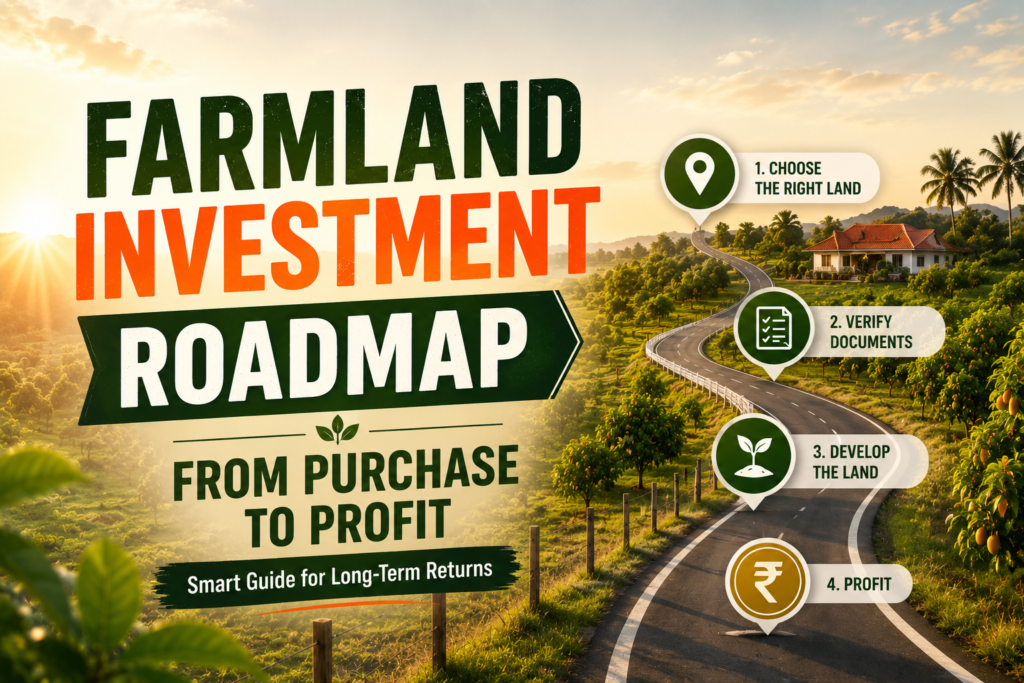
Table of Contents
- Why Invest in Farmland?
- Step 1: Define Your Investment Goals
- Step 2: Choose the Right Location
- Step 3: Verify Legal Documents
- Step 4: Assess Water and Soil Quality
- Step 5: Purchase and Register the Land
- Step 6: Develop the Farmland
- Step 7: Select the Right Crop
- Step 8: Generate Income
- Step 9: Increase Property Value
- Step 10: Exit Strategy
Why Invest in Farmland?
Farmland has become one of the most reliable long-term investments because it combines asset appreciation with income potential.
Key advantages include:
- Long-term value appreciation
- Lower market volatility
- Multiple income sources
- Tangible ownership
- Sustainable investment
- Wealth preservation
- Opportunity for passive income
Step 1: Define Your Investment Goals
Before purchasing farmland, identify your objective.
Ask yourself:
- Are you buying for capital appreciation?
- Do you want regular farming income?
- Are you planning a weekend farm?
- Is this an inheritance for future generations?
Having a clear purpose helps you choose the right property.
Step 2: Choose the Right Location
Location is one of the biggest factors affecting future returns.
Look for land that offers:
- Highway connectivity
- Reliable water sources
- Fertile soil
- Nearby towns
- Infrastructure development
- Growing demand
Areas experiencing rapid development often see higher appreciation over time.
Step 3: Verify Legal Documents
Never purchase farmland without completing legal verification.
Check:
- Patta
- Chitta
- Adangal
- Parent documents
- Encumbrance Certificate
- Survey records
- Access road rights
Consulting a legal expert before registration can help prevent future disputes.
Step 4: Evaluate Water and Soil
Healthy farmland starts with healthy soil and reliable water availability.
Consider:
- Borewell availability
- Rainwater storage
- Soil fertility
- Drainage
- Irrigation options
These factors directly influence productivity and long-term profitability.
Step 5: Complete the Purchase
After verification:
- Negotiate the price
- Register the property
- Transfer ownership records
- Update revenue records
- Secure all original documents
Proper documentation protects your investment.
Step 6: Develop Your Farmland
Once ownership is complete, improve the land.
Possible developments include:
- Fencing
- Drip irrigation
- Internal roads
- Water storage
- Solar-powered pumps
- Farm gate
- Tree plantation
These upgrades improve usability and increase market value.
Step 7: Choose the Right Farming Model
Select crops based on your investment horizon.
Examples:
Short-term:
- Vegetables
- Millets
- Pulses
Medium-term:
- Banana
- Guava
- Papaya
Long-term:
- Mango
- Coconut
- Sapota
Tree-based farming often provides steady returns over many years.
Step 8: Create Multiple Income Streams
Farmland can generate income in several ways.
Examples include:
- Fruit sales
- Timber
- Farm tourism
- Weekend stays
- Organic farming
- Contract farming
- Leasing
- Agri-processing
Diversifying income reduces risk and improves overall returns.
Step 9: Increase Land Value
Over time, farmland can appreciate due to:
- Highway expansion
- Urban growth
- Infrastructure projects
- Improved accessibility
- Mature plantations
- Better farm facilities
Regular maintenance and development help maximize resale value.
Step 10: Plan Your Exit Strategy
Every investment should include an exit plan.
Options include:
- Selling after appreciation
- Passing it to future generations
- Leasing for recurring income
- Continuing commercial farming
- Converting it into a farm retreat (where regulations allow)
Planning ahead ensures you achieve your financial goals.
Common Mistakes to Avoid
Avoid these common errors:
- Buying without legal verification
- Ignoring water availability
- Choosing poor locations
- Focusing only on low prices
- Underestimating maintenance costs
- Having no long-term plan
Careful planning helps protect your investment.
Roadmap Summary
| Stage | Goal |
|---|---|
| Define Goals | Know your investment purpose |
| Choose Location | Select a high-growth area |
| Verify Documents | Ensure legal ownership |
| Check Water & Soil | Confirm agricultural suitability |
| Register Land | Complete the purchase securely |
| Develop the Property | Improve infrastructure |
| Start Farming | Generate income |
| Increase Value | Enhance appreciation potential |
| Exit or Hold | Maximize long-term returns |
FAQs
Is farmland a good long-term investment?
Yes. Well-located farmland can offer long-term appreciation along with opportunities for agricultural income.
Can beginners invest in farmland?
Absolutely. With proper research, legal verification, and planning, first-time investors can enter the market confidently.
How can farmland generate income?
Income may come from crop cultivation, leasing, agroforestry, farm tourism, or other agricultural activities, depending on the property and local regulations.
How important is location?
Location significantly affects accessibility, future development potential, and resale value.
What should I check before buying farmland?
Review ownership records, legal documents, water availability, soil quality, road access, and surrounding infrastructure.
Conclusion
A successful farmland investment is built on thoughtful planning rather than chance. By following a clear roadmap—from setting your investment goals and verifying legal documents to developing the land and creating sustainable income streams—you can turn a simple land purchase into a valuable long-term asset.
Whether you’re seeking capital appreciation, passive income, or a peaceful retreat connected to nature, farmland offers opportunities that grow over time. Investing with a long-term perspective and making informed decisions at every stage can help you unlock the full potential of your land.