
Introduction
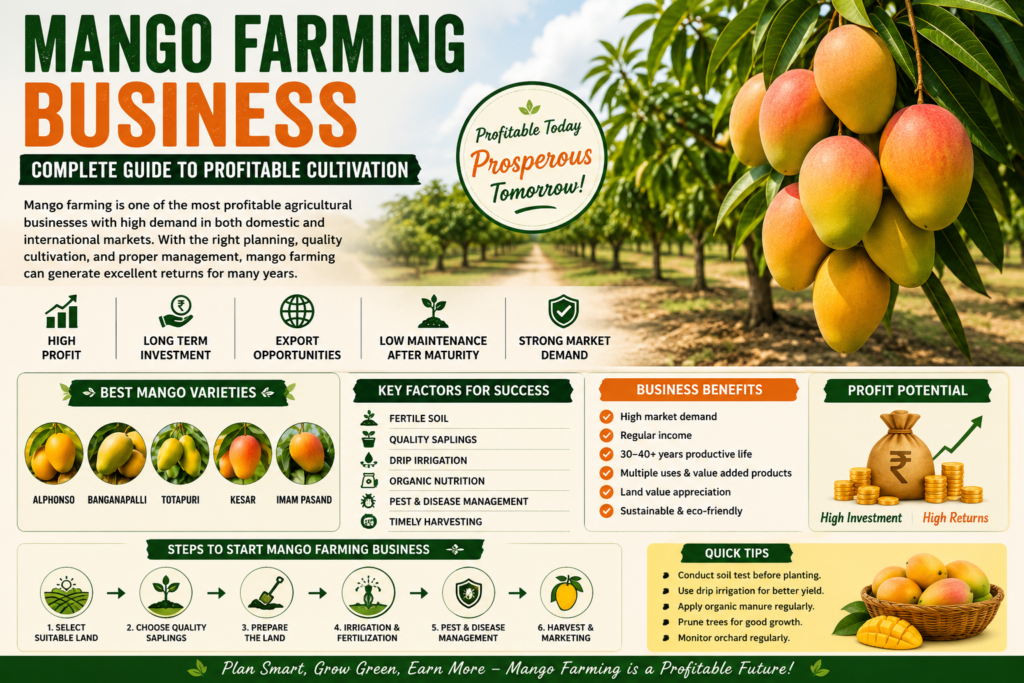
The mango farming business is one of the most profitable agricultural ventures in India. Known as the “King of Fruits,” mangoes enjoy strong demand in both domestic and international markets. Moreover, India is the world’s largest producer of mangoes, making mango cultivation an attractive opportunity for farmers, entrepreneurs, and investors alike. Whether you’re planning to establish a commercial mango orchard or invest in premium mango farmland, understanding the basics of cultivation is essential for long-term success.
In addition, mango farming offers multiple income opportunities through fresh fruit sales, processed products, exports, and value-added businesses. However, profitability depends on selecting the right variety, preparing fertile land, ensuring proper irrigation, and following scientific farming practices. Therefore, careful planning is the key to building a successful mango farming business.
This guide explains everything you need to know about mango farming, including land selection, planting methods, irrigation, fertilization, pest management, harvesting, investment costs, and profit potential.
Table of Contents
- Why Start a Mango Farming Business?
- Best Mango Varieties for Commercial Farming
- Land and Soil Requirements
- Planting and Orchard Management
- Irrigation and Fertilizer Management
- Pest and Disease Control
- Harvesting and Profit Potential
- Tips for a Successful Mango Farming Business
- Frequently Asked Questions
- Conclusion
Why Start a Mango Farming Business?
The mango farming business continues to grow because mangoes remain one of the most consumed fruits worldwide. Furthermore, increasing export demand has created new opportunities for commercial farmers. As a result, many investors now consider mango cultivation a reliable long-term agricultural investment.
Benefits of Mango Farming
- High market demand
- Long productive lifespan
- Strong export potential
- Excellent profit margins
- Low maintenance after maturity
- Long-term land appreciation
Additionally, mango trees can produce fruits for several decades when managed properly.
Best Mango Varieties for Commercial Farming
Selecting the right mango variety plays a major role in determining profitability. For example, Alphonso is famous for its premium quality, while Banganapalli is widely cultivated for commercial production.
Popular mango varieties include:
- Alphonso
- Banganapalli
- Imam Pasand
- Neelum
- Totapuri
- Malgova
- Kesar
- Dasheri
Similarly, choosing varieties based on local climate conditions helps improve productivity.
Land and Soil Requirements
Land selection is one of the most important steps in mango farming. First of all, choose fertile soil with excellent drainage. Moreover, avoid waterlogged areas because excessive moisture can damage tree roots.
Ideal Conditions
- Well-drained loamy soil
- Soil pH between 5.5 and 7.5
- Good sunlight
- Reliable irrigation source
- Easy road connectivity
Most importantly, conduct a soil test before planting to determine nutrient levels.
Planting and Orchard Management
Proper planting techniques directly influence tree growth and fruit production. Initially, prepare the land by removing weeds and leveling the surface. After that, dig planting pits and enrich them with organic manure.
Recommended Spacing
- Traditional planting: 10m × 10m
- High-density planting: 5m × 5m
In addition, install drip irrigation systems to improve water efficiency.
Regular orchard management includes:
- Pruning
- Weed control
- Mulching
- Nutrient application
Consequently, healthy trees produce higher-quality fruits.
Irrigation and Fertilizer Management
Water management is essential throughout the growing season. During the early stages, young trees require regular irrigation. However, mature trees need less frequent watering except during flowering and fruit development.
Recommended nutrients include:
- Farmyard manure
- Nitrogen
- Phosphorus
- Potassium
- Micronutrients
Furthermore, organic compost improves soil fertility and moisture retention.
Pest and Disease Management
Every mango farmer should monitor the orchard regularly. For instance, common pests include fruit flies, hoppers, and stem borers.
Common diseases include:
- Powdery mildew
- Anthracnose
- Dieback
Therefore, follow integrated pest management practices by combining biological, cultural, and approved chemical control methods.
Likewise, removing infected branches helps prevent disease spread.
Harvesting and Profit Potential
Harvesting begins when mangoes reach the correct maturity stage. Generally, trees start producing commercial yields after four to six years, depending on the variety and cultivation method.
Moreover, mature mango orchards can remain productive for more than 40 years.
Factors affecting profit include:
- Tree density
- Yield per tree
- Market demand
- Fruit quality
- Transportation
- Storage facilities
As a result, well-managed orchards often generate higher returns than poorly maintained farms.
Tips for a Successful Mango Farming Business
Before starting, prepare a proper business plan. Next, invest in quality saplings from certified nurseries. Additionally, monitor soil fertility regularly. Besides, adopt modern irrigation techniques to reduce water usage. Furthermore, maintain proper pruning schedules to improve sunlight penetration.
Most importantly, visit your orchard regularly and address pest or nutrient issues early. Finally, stay updated with market trends to maximize profits.
Frequently Asked Questions
1. Is mango farming profitable?
Yes. Overall, mango farming can be highly profitable because of strong domestic and export demand.
2. How many years does a mango tree take to produce fruit?
Most commercial varieties begin fruit production within 3–5 years under good management.
3. Which mango variety is best for commercial farming?
Banganapalli, Alphonso, Totapuri, Imam Pasand, and Kesar are popular commercial varieties.
4. How much water do mango trees need?
Young trees require regular watering, whereas mature trees need irrigation mainly during flowering and fruit development.
5. Which soil is best for mango farming?
Well-drained loamy soil with a pH between 5.5 and 7.5 is ideal.
Conclusion
The mango farming business offers an excellent opportunity for farmers and investors seeking long-term agricultural income. Moreover, rising consumer demand and export opportunities continue to strengthen the industry’s growth. In addition, choosing fertile land, quality saplings, efficient irrigation, and proper orchard management significantly improves productivity.
Ultimately, success in mango farming depends on careful planning, regular maintenance, and sustainable cultivation practices. Whether you’re starting a new orchard or expanding an existing one, investing in the right techniques can help you build a profitable and rewarding mango farming business for years to come.